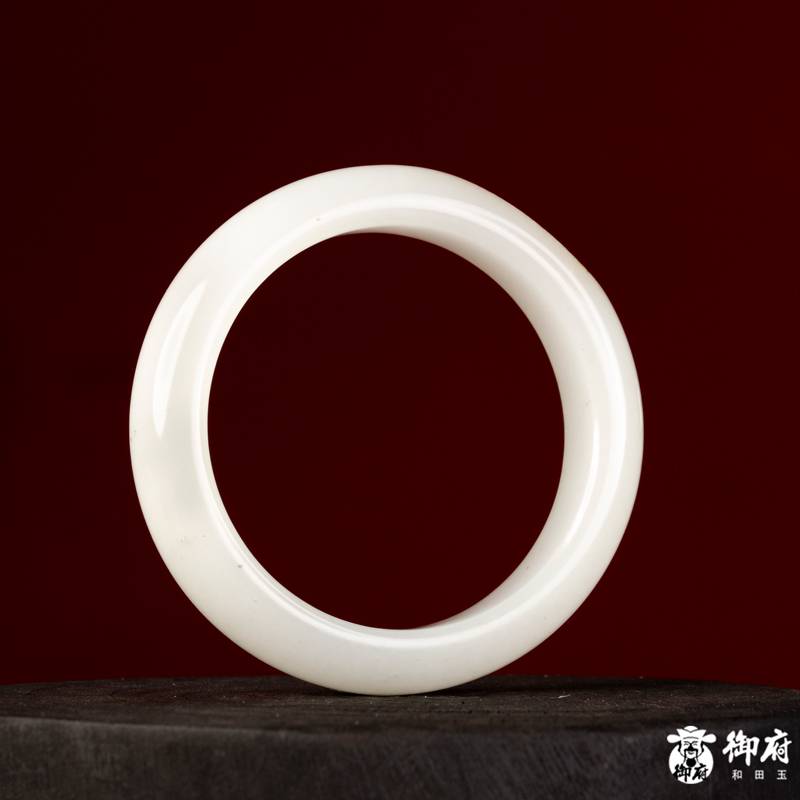
Seed material and mountain material describe how rough nephrite is found and weathered. They are useful terms, but neither is a quality grade. A well-structured mountain bangle can be a better buy than a poorly documented piece sold under a seed-jade label.
What the three labels usually mean
Seed material, often translated from zi liao, generally refers to nephrite rounded and weathered in a river environment. Mountain material is taken from a primary rock source and may retain a more angular outer surface. Mountain-stream material is used for pieces that have moved and weathered but are not described as fully river-rounded. English marketplace terms are inconsistent, so ask the seller for the original Chinese term and their definition.
- Seed material may show a natural outer skin or rounded river surface.
- Mountain material can be cut from a larger primary vein and may show a different surface history.
- Mountain-stream is a trade category, not a universal scientific classification.
Skin is not the same as a coating
Natural skin is part of the rough stone and can vary in colour and thickness. A coating or dye is applied after extraction. Close photographs can help, but they cannot prove the difference on their own. Look for an abrupt colour boundary, colour pooled in cracks, or a surface that does not match the body, then ask for treatment disclosure and independent testing when the price is significant.
- Request close-ups of polished and unpolished areas.
- Ask which parts of the bangle retain natural skin.
- Do not treat yellow or brown colour as proof of seed material.
Why seed material often costs more
Collectors may pay more for a rounded form, attractive skin and a convincing material history. That premium is based on scarcity, appearance and evidence together. The label alone does not justify a multiple of the price. Compare the actual body, dimensions, condition and documentation before comparing the story.
- Ask what evidence supports the river-material claim.
- Compare texture and condition with a similar mountain-material bangle.
- Record the agreed description on the quotation.
How to evaluate a bangle in practice
Inspect the inner ring, outer face and edge under neutral daylight. Measure the inner diameter, width and thickness in millimetres, then ask which areas were polished or carved away. A short rotating video is useful because it shows whether the colour and skin continue around the full circumference.
- Confirm the image shows the exact bangle for sale.
- Ask for a view of every quarter turn, not one flattering angle.
- Treat origin and material as separate questions on any report.
The safe conclusion
Seed, mountain and mountain-stream labels tell you about material history, not the final verdict on value. The better purchase is the piece whose material, condition, fit and paperwork are clear enough for you to accept the risk.